
Preventative Care
Your Chimney Doesn't Need Sweeping Because It's Dirty — It Needs It So Your House Doesn't Burn
Creosote is the reason chimney fires exist, and Hudson Valley wood-burners build it fast. Here's what a real sweep checks, how often you need one, and the warning signs between visits.

The Anytime Hudson Field Desk
Hudson Valley Home-Services Team
July 11, 2026 · 6 min read
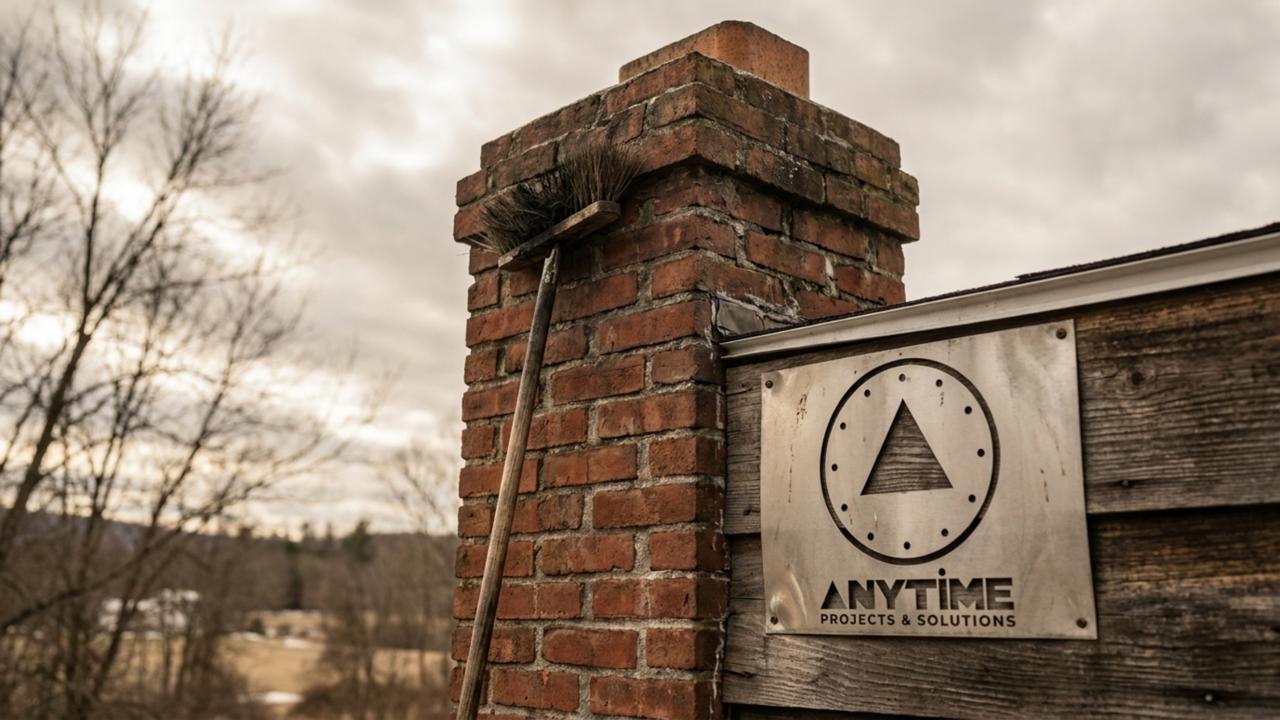
Plenty of valley homes still heat with wood, and there's nothing better on a January night. But a wood stove or fireplace is a small fire you invite into your house on purpose, and the flue that carries the smoke out is the part that keeps it from becoming a big fire you didn't.
A chimney sweep isn't about soot on the mantel. It's about creosote in the flue — and creosote is genuinely dangerous once it builds up.
What creosote is and why it stacks up fast here
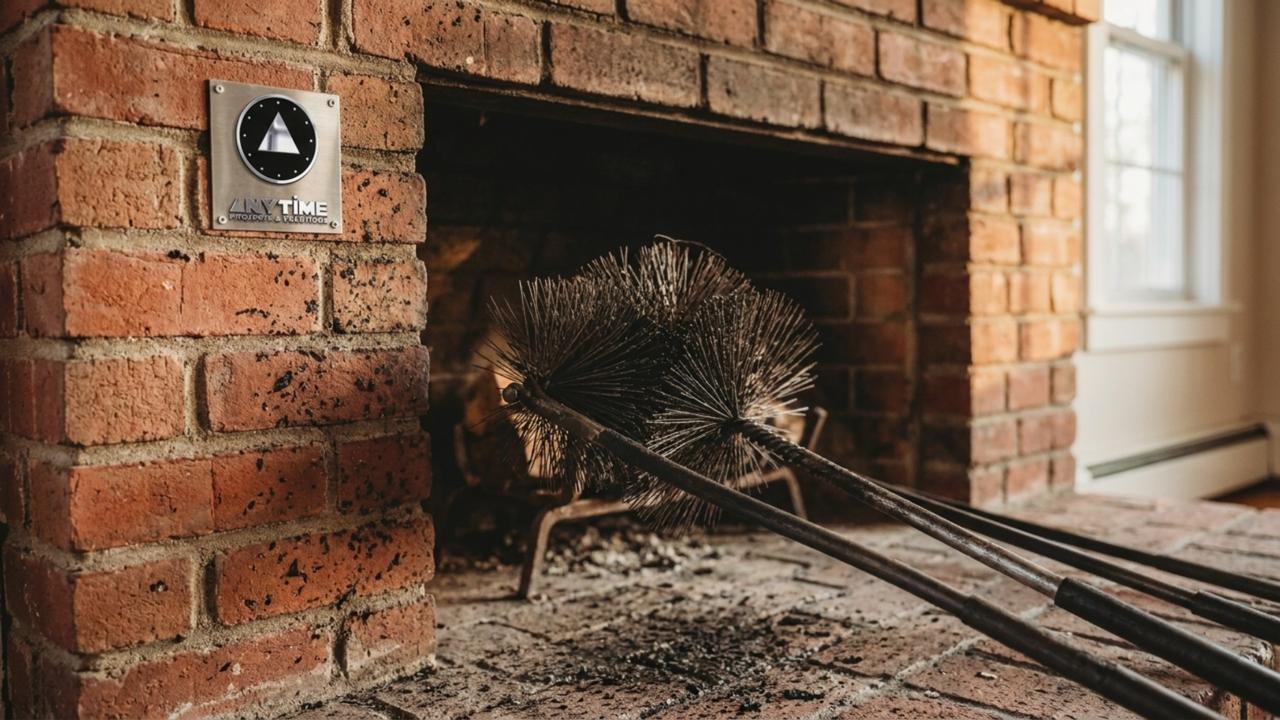
Creosote is the tarry residue that condenses on the inside of the flue as wood smoke cools. Burn unseasoned wood — and a lot of valley firewood gets burned too green — and you produce it far faster. It's flammable. Enough of it, plus a hot enough fire, and the flue itself ignites. That's a chimney fire, and it can reach well over a thousand degrees.
A sweep removes that buildup before it reaches the danger threshold. That's the whole point.
Included with Anytime Hudson
One membership. Every job on this list, handled.
Bronze, Silver, Gold, and Platinum members keep their homes on schedule with vetted Hudson Valley crews — services included or discounted, at rates locked for a full year.
How often, honestly
The common guidance is once a year, and for a regular wood-burner that's right. If you burn most nights through the winter, once a year is a floor, not a ceiling. If you only light the fireplace a handful of times over the holidays, every couple of seasons with an inspection in between is reasonable.
Gas inserts still need an inspection — not for creosote, but for blockages, liner condition, and animal nests. Valley chimneys are prime real estate for squirrels and chimney swifts.
Signs you shouldn't wait
Smoke pushing back into the room, a strong tarry smell on damp days, or a fire that just won't draw — those all point to a restricted flue. Black, flaky, or shiny buildup you can see is creosote. Any of these and you stop burning until it's inspected.
A cap that's rusted through or missing is its own problem: it lets rain, animals, and debris straight in, and water in a masonry chimney freezes, expands, and cracks the structure over a valley winter.
Stop worrying about this one
One membership. Every job on this list, handled.
Bronze, Silver, Gold, and Platinum members keep their homes on schedule with vetted Hudson Valley crews — services included or discounted, at rates locked for a full year.
Keep reading
More from the Journal
The Anytime Hudson Journal
Catch the next problem before it catches you.
Seasonal, Hudson-specific home-care guides from the crews who do the work — straight to your inbox. Free, occasional, and genuinely useful.
No spam. Unsubscribe anytime.