
Major Projects
The Septic System You Never Think About Until It's in Your Basement
Out here plenty of homes are on septic, and a neglected tank is one of the most expensive, unpleasant failures a house can have. The maintenance is simple and cheap. The failure is neither.

The Anytime Hudson Field Desk
Hudson Valley Home-Services Team
June 14, 2026 · 7 min read
If your Hudson Valley home is outside the village sewer lines — and many are — you're on a septic system, whether you think about it or not. It quietly handles everything, right up until it doesn't, and a failed septic is a genuinely awful, genuinely expensive problem.
The maddening part is how avoidable it is. The whole system asks for very little. It just asks consistently.
How it works, in one paragraph
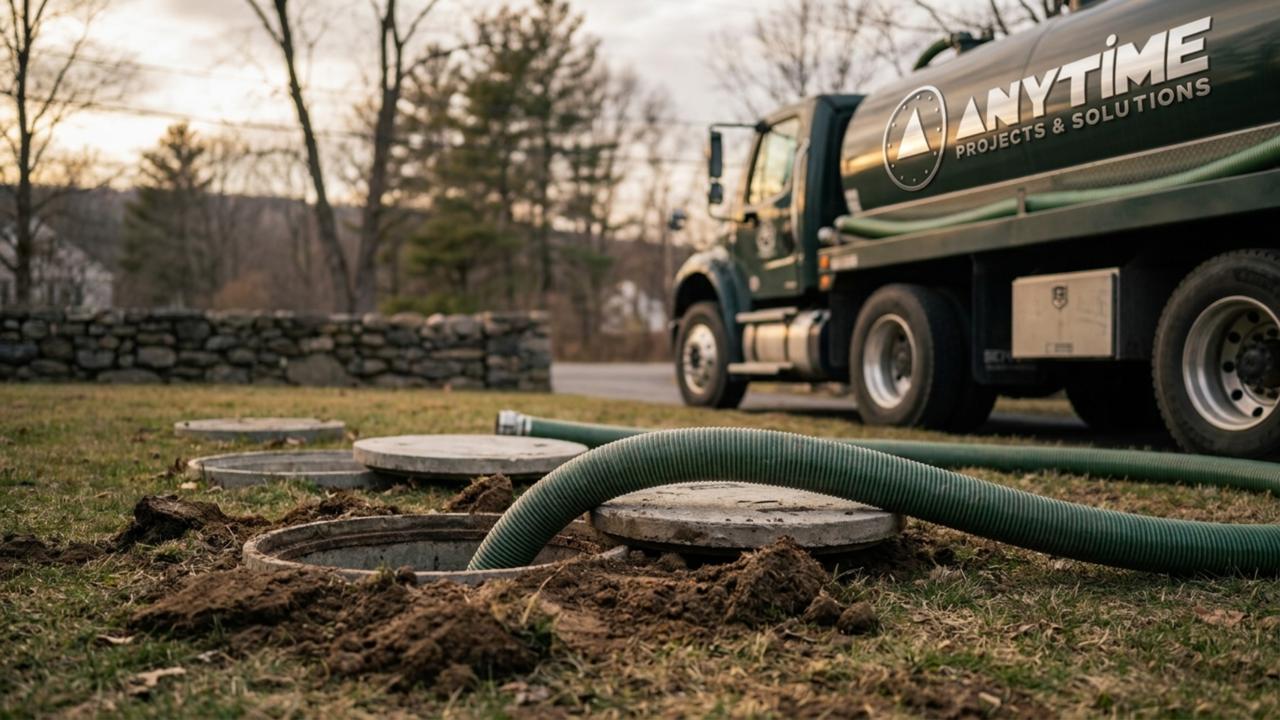
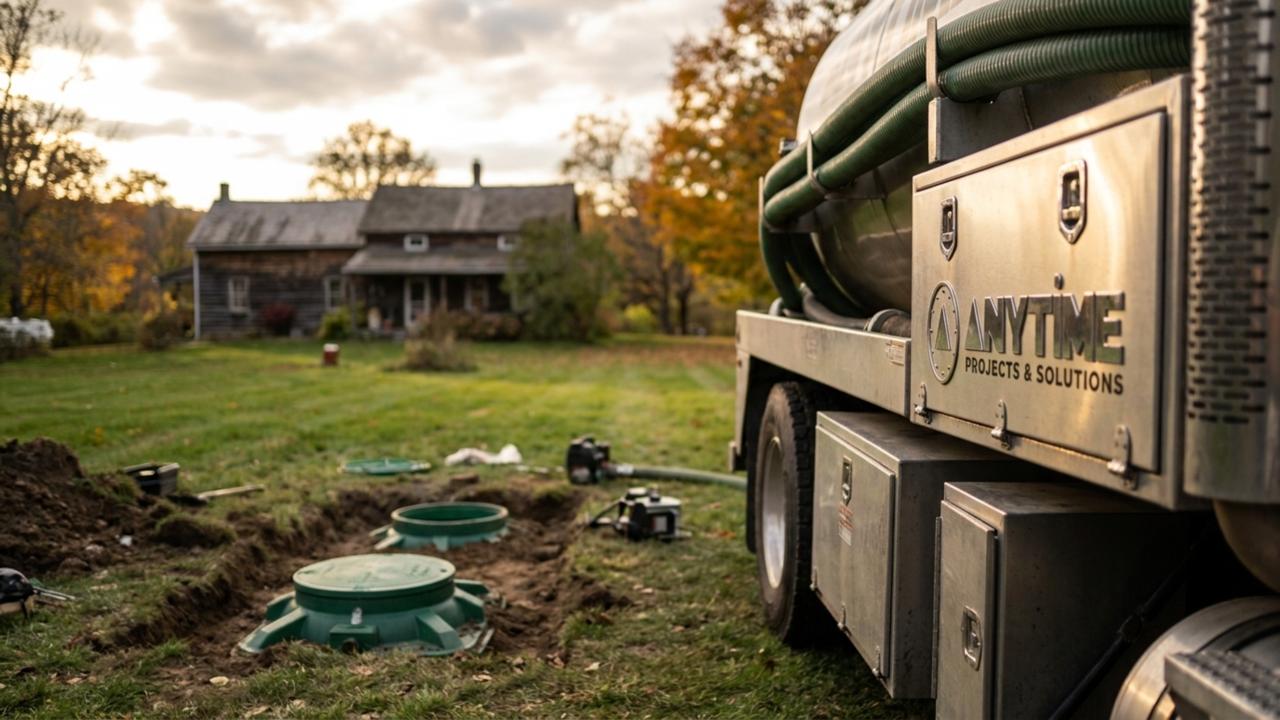
Wastewater flows to a buried tank. Solids settle to the bottom as sludge, grease floats to the top as scum, and the relatively clear liquid in the middle flows out to the leach field, where it filters down through the soil. That's the whole system. It works beautifully as long as the solids stay in the tank and the field stays healthy.
The failures all come from breaking one of those two rules.
Included with Anytime Hudson
One membership. Every job on this list, handled.
Bronze, Silver, Gold, and Platinum members keep their homes on schedule with vetted Hudson Valley crews — services included or discounted, at rates locked for a full year.
Pump it on schedule — this is the whole job
Solids build up no matter what. Let the sludge layer get too deep and it starts flowing out to the leach field, where it clogs the soil permanently. A clogged field is the four-figure-to-five-figure failure. Pumping the tank on schedule — typically every three to five years depending on tank size and household — is what prevents it.
That's the deal: a few hundred dollars every few years to pump, versus tearing up the yard to replace a field. It's the best-value maintenance in the whole house.
What not to flush, and what not to park
The tank runs on bacteria that digest waste. Bleach in volume, 'flushable' wipes (they aren't), grease down the drain, and heavy chemicals all disrupt it. Wipes and grease are the two biggest culprits we see. Nothing goes down but what's supposed to.
Above ground, protect the leach field: don't drive or park on it, don't build over it, and keep large tree roots away — they'll invade the pipes hunting for water. Know where your tank and field are so you're not guessing when something's wrong.
Stop worrying about this one
One membership. Every job on this list, handled.
Bronze, Silver, Gold, and Platinum members keep their homes on schedule with vetted Hudson Valley crews — services included or discounted, at rates locked for a full year.
Keep reading
More from the Journal
The Anytime Hudson Journal
Catch the next problem before it catches you.
Seasonal, Hudson-specific home-care guides from the crews who do the work — straight to your inbox. Free, occasional, and genuinely useful.
No spam. Unsubscribe anytime.